



The Münchener Hypothekenbank

For 130 years, Münchener Hypothekenbank has been a specialist for real estate financings with a clear focus: financing solutions for residential and commercial real estate in Germany and selected international markets.

We develop long-term, sustainable financing solutions for private customers, commercial customers, and institutional investors based on efficient structures, a high level of risk expertise, and a solid refinancing base. Thanks to our balanced business model, we have a broadly diversified and low-risk mortgage portfolio, which consists predominantly of residential real estate in Germany. As an issuer of Mortgage Pfandbriefe, Münchener Hypothekenbank also enjoys an excellent reputation on the capital markets.

As a reliable financing partner, the bank stands for stability, professionalism, and responsible growth in a dynamic real estate market, maintaining sustainable business relationships with its customers and partners.


Private customer business

We maintain 11 regional offices  throughout Germany staffed with experts to support our ongoing business relationships with the Volksbanken and Raiffeisenbanken. We conduct our private property financing business via the Cooperative Financial Network (genossenschaftliche FinanzGruppe), the Volksbanken and Raiffeisenbanken, and our regional offices, which serve as lending partners to local banks within the Cooperative Financial Network.
 

Commercial lending business

Our national and international commercial property lending business is managed centrally from our main office in Munich. Within Germany we also maintain offices in Cologne, Frankfurt/Main, Hamburg and Berlin. 

Münchener Hypothekenbank at a glance

Our history

Erster Vorstand 380
1896
1897
1897
1900
1928
1945
1948
1971
2008
2009
2021
Erster Vorstand 380

1896

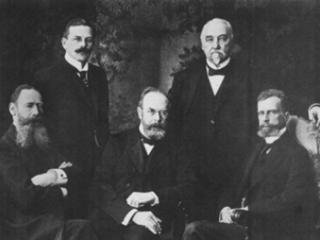
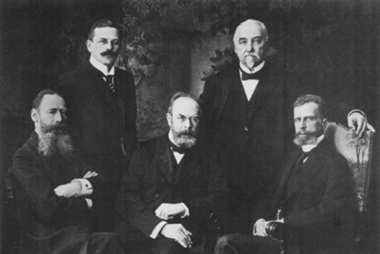
Münchener Hypothekenbank was founded on 2 December 1896 as the Bayerische Landwirthschaftsbank. Intensive political discussions took place before the Bank was founded concerning the Bank's business purpose and legal form. There was agreement that farmers and the agricultural sector, which had suffered great hardship following the liberation of peasants when they became become free entrepreneurs, needed support in the form of mortgage loans at fair interest rates. The Bavarian state government proposed a compromise: a mortgage bank organised as a cooperative. This proposal found a majority in both chambers of the Bavarian Landtag (state parliament).

From left to right: The first Board of Management with the Chairman of the Supervisory Board: Karl Adam Matterstock (1896-1919), Friedrich Bonschab (1896-1919), Karl Freiherr von Cetto-Reichertshausen (1896-1913), Wilhelm Süskind (1899-1919), Maximilian Freiherr von Soden-Fraunhofen (Chairman of the Supervisory Board 1896-1912).
 

1897

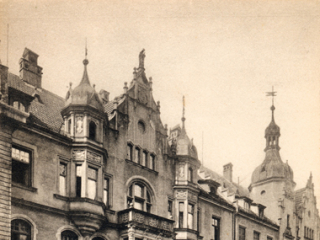
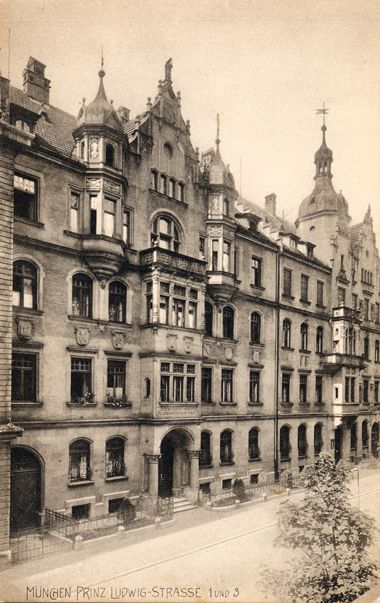
The Bayerische Landwirthschaftsbank began doing business on 1 April 1897 at Prinz-Ludwig Strasse 3 in Munich. The building complex, which still exists today, belonged to the Bavarian Agricultural Council and housed not only the council and the Bank but also the Bavarian Association of Agricultural Cooperatives and its central treasury.

The State of Bavaria state supported the start of the Landwirthschaftsbank with an interest-free loan of one million marks. A commissioner who supervised the business guaranteed the Bank's solidity. According to the statutes, loans were only granted to cooperative members, who also had to be from Bavaria.

1897

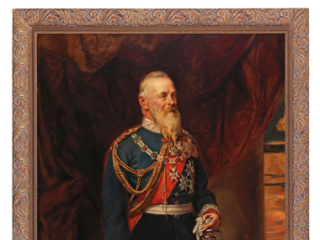
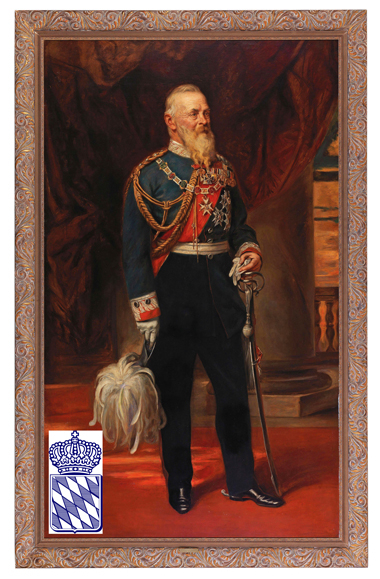
The Bavarian royal family also supported the Bayerische Landwirthschaftsbank.  Prince Regent Luitpold granted it a special privilege in 1897: “His Royal Highness Prince Luitpold, administrator of the Kingdom of Bavaria, has in his mercy approved that the Bayerische Landwirthschaftsbank e.G.m.b.H. may carry a seal showing the King’s Crown on the Bavarian coat of arms and carrying the words ‘Bayerische Landwirthschaftsbank'".

The stylised Wittelsbach crown still adorns the Bank's logo today. The House of Wittelsbach also has personal ties to MünchenerHyp to this day. H.R.H. Duke Max in Bavaria was a member of the Bank’s Supervisory Board from 1991 to 2011 and became Deputy Chairman of the Supervisory Board in 2005; his daughter Duchess Anna has been a member of the Supervisory Board since 2019.
Image: Friedrich August von Kaulbach, Prinzregent Luitpold von Bayern, Dorotheum Wien
 

1900

The Bayerische Landwirthschaftsbank was successful from the start and grew rapidly. It financed farmers, who mainly used the Landwirthschaftsbank's loans to pay off old debts. In addition, loans were made to Bavarian municipalities. The Bank’s  municipal loans made an important contribution to the development and modernisation of Bavaria's rural infrastructure, for example by financing modern water supplies or the construction of railway lines.

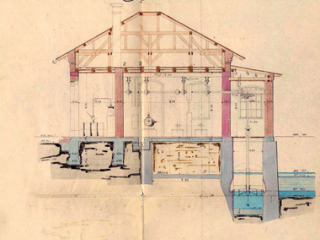
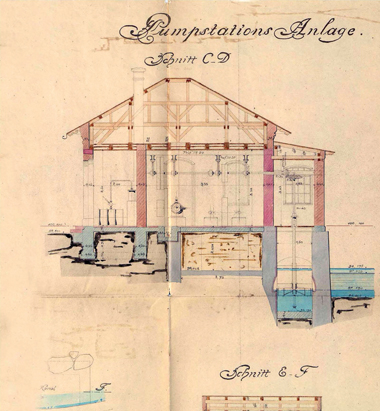
Around the turn of the century, for example, the Landwirthschaftsbank granted the Upper Palatinate town of Hemau a loan of 120,000 marks, which it used to modernise its water supply. The town built a new well, new reservoirs and water pipes, expanded the pumping station, installed a modern turbine and laid modern house connections. 
Repro from: Böhm, Feuerer, Schwaiger, Wasserversorgung der Stadt Hemau, 2014, page 66.

1928

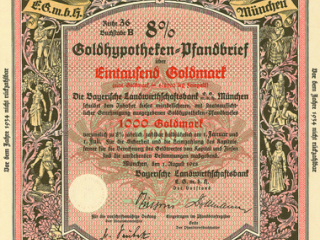
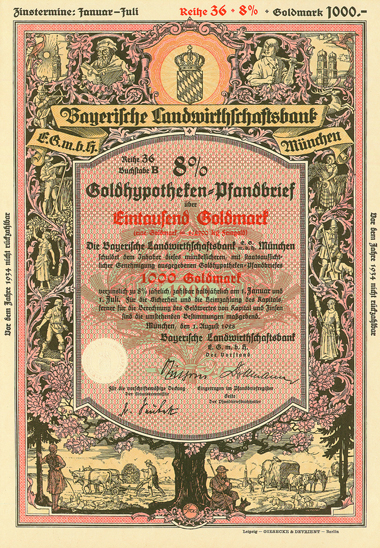
From the very beginning, the Bayerische Landwirthschaftsbank refinanced itself primarily by issuing Pfandbriefe backed by mortgages on property. The Pfandbrief, especially the Mortgage Pfandbrief, has always proven to be a reliable source of refinancing, especially in uncertain times such as World War I, the global economic crisis or the financial market crisis of 2008.

The Bank’s Pfandbrief issues repeatedly broke new ground. In 2014, it was the first bank to issue an ESG Pfandbrief. This made it a pioneer for sustainable and green Pfandbriefe, which have since experienced a significant upswing. Image: A gold Mortgage Pfandbrief from 1928.

1945

After the National Socialists came to power in 1933, the Bayerische Landwirthschaftsbank also was also brought into line with party policies. It was a difficult time for business. According to the Reich Hereditary Farm Law (Reichserbhofgesetz), the property of farmers who had inherited their farms (Erbhofbauern) could not be burdened with mortgages. New business declined. But the Bank found a solution. Starting in 1934 it began to finance homes in the countryside and the suburbs of cities. In doing so, it laid the foundation for today's core business area, financing residential property. 

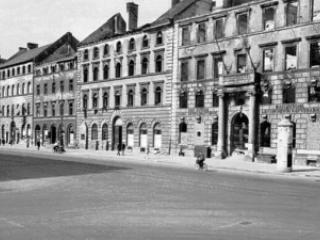
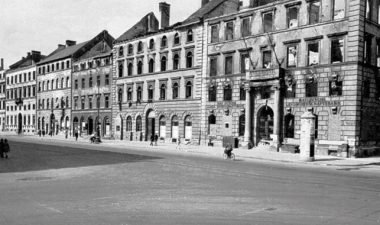
At the beginning of January 1945, the building that the Landwirthschaftsbank had moved into at Ludwigstraße 7 in 1926 was destroyed in a night-time bombing raid. Only the cellar with the safe remained undamaged. But business had to continue: Part of the operation was relocated to the employees' homes. In addition, temporary offices were set up in the basement. The Landwirthschaftsbank was also given temporary accommodations in the neighbouring building and a few houses away at the Süddeutsche Bodencreditbank. Thus the bank was soon able to resume its business operations - at least to a limited extent.

1948

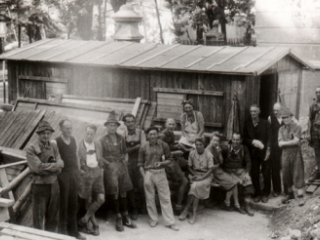
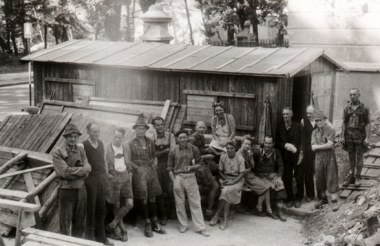
When the war was over, the Landwirthschaftsbank had to find a new building. The ruins in Ludwigstraße had to be cleared to widen a street. The Bank found what it was looking for at Nußbaumstraße 12, near Sendlinger-Tor Platz.  Although this building was also in ruins, the Bank’s employees rebuilt it brick by brick themselves. In 1948, they were able to move into the building and the Bayerische Landwirthschaftsbank made its comeback from here.

But the new beginning was tough. As late as 1948, the annual report stated that new business was "next to nothing due to the confused monetary situation". This was to change soon following the currency reform. The economic miracle and the reconstruction of the destroyed cities led to rapid growth.
 

1971


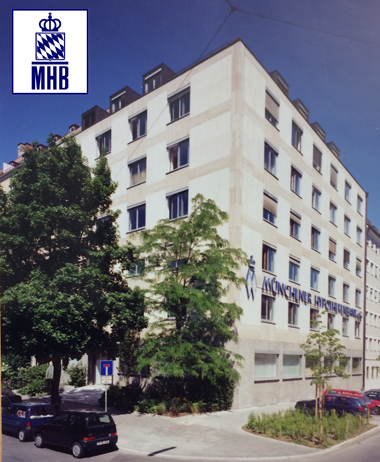
In the 1960s, the financing of property and municipal loans became increasingly important, while loans for farming declined more and more due to structural changes. By 1971 their share of the total loan portfolio had fallen to 30 percent.

Consequently, the Bank gave itself a new name in the same year: Münchener Hypothekenbank eGmbH. The old name was not only considered outdated because of its antiquated spelling, it also no longer reflected the Bank’s business model, which in the interim had expanded to cover all facets of mortgage financing. It now offered loans for housing, commercial property, farming and municipalities.   

2008

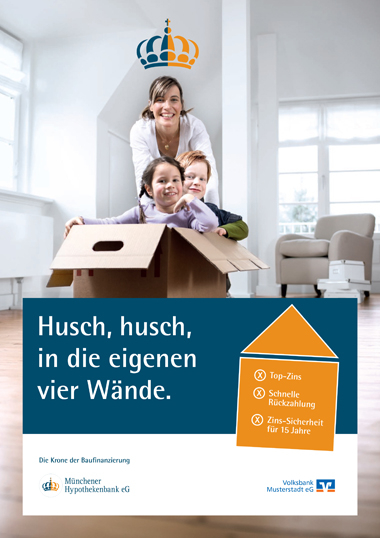
Just one year after the outbreak of the financial market crisis in 2008, an upswing in the property market began that was triggered by the central banks’ loose monetary policy, which has continued until today. Münchener Hypothekenbank benefited from the boom in both residential and commercial property financing and was able to grow its new mortgage business very strongly.

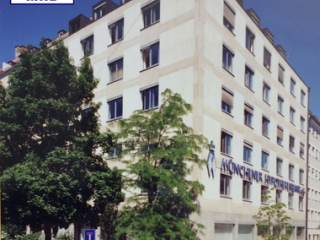
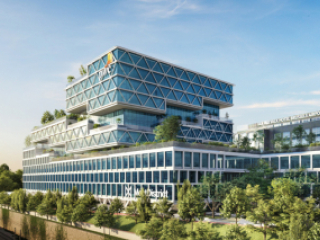
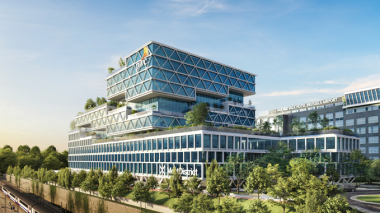
Münchener Hypothekenbank began to expand its commercial property financing business at the start of the new millennium. Its customers are primarily professional property investors in Germany, other Western European countries and the USA. It also cooperates with the Volksbanken and Raiffeisenbanken in this business segment. The Bank primarily finances office properties, retail properties, logistics properties and residential property portfolios. It also participates in syndicated financing deals including the purchase of this impressive office building in Brussels in 2021.
Illustration: BayernLB
 

2009

Just one year after the outbreak of the financial market crisis in 2008, an upswing in the property market began that was triggered by the central banks’ loose monetary policy, which has continued until today. MünchenerHyp benefited from the boom in both residential and commercial property financing and was able to grow its new mortgage business very strongly.

MünchenerHyp began to expand its commercial property financing business at the start of the new millennium. Its customers are primarily professional property investors in Germany, other Western European countries and the USA. It also cooperates with the Volksbanken and Raiffeisenbanken in this business segment. The Bank primarily finances office properties, retail properties, logistics properties and residential property portfolios. It also participates in syndicated financing deals including the purchase of this impressive office building in Brussels in 2021.
Illustration: BayernLB

2021

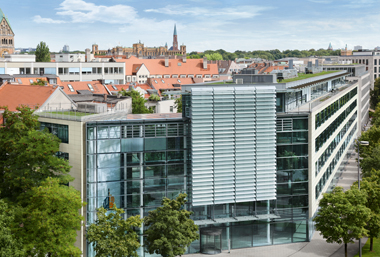
Today, Münchener Hypothekenbank is one of the major European banks directly supervised by the European Central Bank. Thus, a regional mortgage bank for Bavarian agriculture has become an international property bank. At the same time, it has always remained true to its cooperative roots and still operates under the legal form of a registered cooperative. The cooperative guiding principle continues to shape the Bank’s business policy and corporate culture. 

Members

The Bank’s owners consist of a large number of primary banks, cooperative central banks and nearly 65,000 individual members, most of whom are customers. For decades our members have benefited from the bank’s success and have regularly received attractive dividends.


A big idea - shared by many

Over 800 million people around the world belong to a cooperative. In Germany cooperatives have more then 18 million members making them the economic organisation with the most members. Members are the heart of every cooperative, and they stand at the foreground of its business operations.Membership offers more than just a customer relationship. Members are providers of capital, co-owners and participate in profits making them the backbone of the cooperative.

Members

Cooperative Financial Network

The Cooperative Financial Network is one of Germany's largest banking groups, with over 700 Volksbanks and Raiffeisenbanks as well as numerous partner companies, and is a strong financial partner to the economy. Within the Cooperative Financial Network, we work in close cooperation with the local Volksbanks and Raiffeisenbanks.

Whether it's new construction, expansion, modernization, or the purchase of existing properties, the local Volksbanks and Raiffeisenbanks take care of our customers' private real estate financing needs.

Münchener Hypothekenbank belongs to BVR Institutssicherung GmbH and to the Federal Association of German Volksbanken and Raiffeisenbanken's (BVR) protection scheme (Sicherungseinrichtung).